
Page Not Found
The page you are looking for doesn't exist or another error occurred.
Please use the menu above or the search form below to try another section.
Latest News
25th March 2026
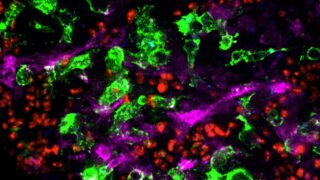
Lab-grown ovarian ‘mini-tumours’ provide new tool for immunotherapy research
Researchers have developed a way to grow miniature ovarian tumours in the lab that mimic the tumour environment found in patients. The new approach offers a useful way to study how cancer cells interact with the immune system and to explore potential treatments. Ultimately, it could help accelerate progress for patients and reduce reliance on research methods involving animals.

11th March 2026
Barts Cancer Institute teams awarded nearly £3m from Cancer Research UK to seek novel cancer therapy targets
Professor Michelle Lockley and Dr Oliver Pearce have both been awarded prestigious Programme Foundation Awards from Cancer Research UK, worth nearly £1.5 million each, to support the work of their research groups at Barts Cancer Institute, Queen Mary University of London.

12th February 2026
NHS changes guidelines for bladder cancer patients following new clinical trial results
Thousands of people with advanced bladder cancer across the UK will now receive three rather than six chemotherapy cycles after Queen Mary University of London-led research led to a change to NHS treatment guidelines. For patients, this means fewer toxic side effects and a better quality of life during treatment.
4th February 2026
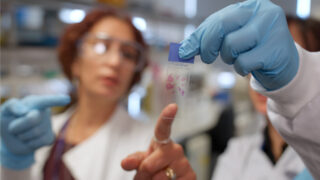
Video: Driving Discoveries for Tomorrow’s Cancer Care
Today, on World Cancer Day, join us as we go behind the scenes at Queen Mary’s Barts Cancer Institute (BCI) and meet the people who are making progress possible.
21st January 2026
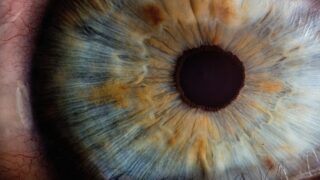
New approach offers hope for people with rare eye cancer
A more active approach to monitoring and treating people with a rare eye cancer (known as uveal melanoma) that has spread to the liver could help some patients to live longer, according to researchers at Barts Cancer Institute, Queen Mary University of London. The findings, from a retrospective study of the largest UK cohort of patients with this condition to date, offer an encouraging sign of progress in this rare and difficult-to-treat cancer.

17th December 2025
Celebrating the BCI’s highlights of 2025
Join us as we look back at some highlights of Barts Cancer Institute’s news stories this year.