
Discovery reveals new understanding of cancer-driving proteins in rare brain tumours and beyond
Scientists have discovered that a single letter change in a gene called PRKCA drives a rare and hard-to-treat brain cancer, chordoid glioma, through an entirely unexpected mechanism. The findings, published in Science Signalling, could open up new ways to design targeted treatments for this difficult-to-treat disease, and possibly for other cancers involving the same gene.
The study was led by Professor Angus Cameron, group leader at Barts Cancer Institute (Queen Mary University of London) and Professor Peter Parker, emeritus group leader at the Francis Crick Institute and King's College London.
Chordoid glioma is a rare tumour that forms deep within the brain, close to areas that control vital functions. Because of its location, surgery to remove the tumour risks complications and often cannot eliminate it completely, allowing the cancer to grow back. Finding drug targets to complement or replace surgery is therefore crucial to improving outcomes for patients.

The PRKCA gene provides instructions for making a protein called protein kinase C alpha (PKCα). This molecule is part of a large family called kinases, which includes some of the most important drug targets for cancer therapies. Kinases regulate how cells behave, grow and communicate by acting as an enzyme, adding phosphate molecules to other proteins that switch them on or off. In most cases it appears that this enzyme activity holds the key to how kinases drive cancer, and many therapies are based on blocking this activity.
However, in the new study, the researchers discovered that the single-letter mutation in PRKCA, identified in chordoid glioma, switches off PKCα’s normal enzyme function yet, paradoxically, drives tumour growth.
The team found that the mutated protein becomes ‘locked’ in a shape that allows it to promote cancer cell growth, even without carrying out its usual enzyme role. The mutation changes the molecules PKCα interacts with, particularly favouring proteins that control how cells’ genes are switched on and off, known as epigenetic regulators.
“This mutation shows us how a single change in a gene can rewire cell behaviour in an unexpected way,” says Professor Angus Cameron. “It challenges our assumptions about how enzymes like PKCα work and opens up new ways of thinking about how to target them in cancer.”
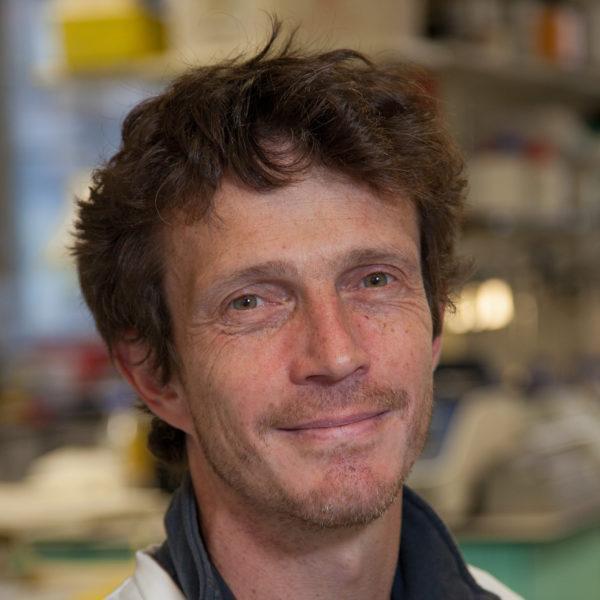
“With this discovery, we can now take distinct therapeutic strategies that go beyond simply blocking enzyme activity,” adds Professor Peter Parker. “By understanding how this mutation alters the protein’s shape and interactions, we can start to design drugs that directly target its uncontrolled signalling behaviour instead.”
While chordoid glioma itself is rare, PRKCA has been implicated in several more common types of glioma, suggesting that insights from this work may have wider implications in these cancers.
“We’re only just beginning to uncover how this mutation reshapes cells’ behaviour, and more work is needed before this knowledge can directly benefit people with cancer,” explains Professor Cameron. “Our next challenge is to pinpoint which of its altered interactions really matter, and how we might target them safely in patients.”
This work was made possible thanks to funding from Cancer Research UK (including the Cancer Research UK City of London Centre), the Medical Research Council and Wellcome.
Category: General News, Publications
No comments yet