
Celebrating the BCI’s highlights of 2025
As we approach the end of 2025, join us as we look back at some highlights of Barts Cancer Institute’s news stories this year. Thank you to our amazing staff, students and partners for making this progress possible.
January
Surprising ‘two-faced’ cancer gene role supports paradigm shift in predicting disease

A genetic fault long believed to drive the development of oesophageal cancer may in fact play a protective role early in the disease, according to new research published by Professor Francesca Ciccarelli and team in Nature Cancer.
February
Barts Cancer Institute co-leads £43.6m initiative to accelerate AI-powered cancer breakthroughs
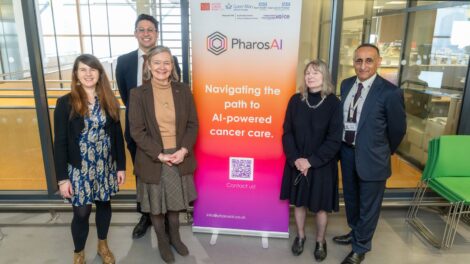
We announced that Professor Louise Jones and Professor Claude Chelala will co-lead a ground-breaking collaboration, PharosAI, that aims to harness cutting-edge artificial intelligence (AI) and unlock decades of NHS cancer data. The UK government committed £18.9 million to the project.
February
Scientists discover the ‘roadmap’ that aggressive cancer uses to spread around the body and identify ways to block its escape
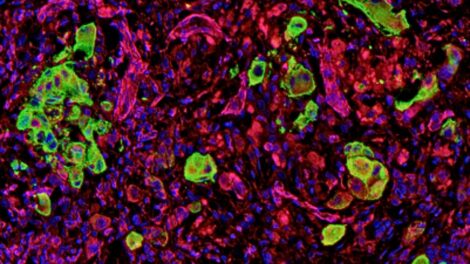
Dr Oscar Maiques, Professor Victoria Sanz Moreno and team discovered a new way to predict which tumours will become aggressive before they metastasise and spread around the body. The findings could help doctors spot which tumours are likely to be aggressive and cause metastatic cancer. They also opened new avenues for treating cancer before it spreads.
April
Smarter chemotherapy approach could delay drug resistance in ovarian cancer

Adaptive chemotherapy can prolong survival in lab models of ovarian cancer, according to new results from Professor Michelle Lockley and team. The findings could pave the way for a more effective and gentler approach to treating ovarian cancer that uses existing drugs in a more intelligent way.
May
Beyond ‘one size fits all’: Study reveals ethnic differences in breast cancer development and outcomes, demanding tailored care approaches

Women of African or South Asian genetic ancestry tend to develop breast cancer and die at a younger age than women of European ancestry, according to new research by Professor Claude Chelala and team. The study, which looked at clinical and genetic data from over 7,000 women with breast cancer, also found important genetic differences in these women’s cancers that could impact their diagnosis and treatment.
June
Study reveals molecules enabling bowel cancer to hijack healing processes and spread

Dr Mirjana Efremova and team uncovered how bowel cancer cells imitate our gut’s natural healing processes to adapt, spread and grow. The findings could lead to new treatment strategies aimed at preventing cancer spread.
July
Could a breath test detect blood cancer?

Molecules exhaled in the breath may provide clues to detect blood cancer, according to new research by Dr John Riches and team. The findings could enable the development of a blood cancer breathalyser, providing a rapid, low-cost way to detect disease.
August
Breakthrough life-extending treatment for advanced bladder cancer available on NHS

A new combination treatment from Professor Tom Powles and team is approved by NICE for use in the NHS, offering hope to thousands of people living with advanced urothelial cancer. The team's clinical trials showed that overall survival rates were almost twice as long with this new treatment compared to the previous standard treatment.
September
Rogue’ DNA rings reveal earliest clues to deadly brain cancer’s growth
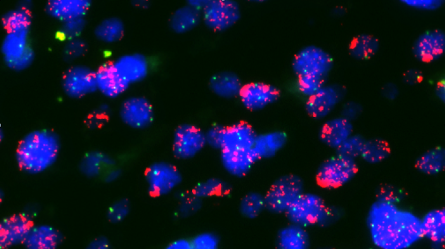
Dr Ben Werner and the Cancer Grand Challenges team eDyNAmiC revealed how rogue rings of DNA that float outside of our chromosomes – known as extrachromosomal DNA, or ecDNA – can drive the growth of a large proportion of glioblastomas, the most common and aggressive adult brain cancer. The discovery could open the door to much-needed new approaches to diagnose glioblastoma early, track its progress and treat it more effectively.
October
Blood test helps guide immunotherapy for bladder cancer

A new clinical trial led by Professor Thomas Powles showed that a blood test to detect tumour DNA could help doctors decide which patients with bladder cancer are most likely to benefit from further treatment after surgery. The new approach improved survival in those identified as high-risk while safely sparing low-risk patients from unnecessary side effects.
October
New spinout launches to advance early pancreatic cancer detection

Professor Tatjana Crnogorac-Jurcevic and Queen Mary Innovation launched a new company, Procyon Diagnostics, to provide pioneering early cancer detection tests. The company’s first test, PancRISK, offers new hope for detecting pancreatic cancer earlier, building on over 15 years of research at the BCI.
November
Discovery reveals new understanding of cancer-driving proteins in rare brain tumours and beyond

Professor Angus Cameron and team discovered that a single letter change in a gene called PRKCA drives a rare and hard-to-treat brain cancer, chordoid glioma, through an entirely unexpected mechanism. The findings could open up new ways to design targeted treatments for this difficult-to-treat disease, and possibly for other cancers involving the same gene.
Category: General News
No comments yet