

Professor Andrejs Braun
PhD, FHEA, FIBMS
Professor of Genome Regulation
Director of Education
Group Leader
Research Focus
Our group studies how epigenetic regulation and genome organisation control the biology of normal and malignant B cells. Our research focuses on the interplay between chromatin structure, nuclear architecture and gene regulation, and how these processes influence somatic mutagenesis and genome stability during B-cell development and immune responses. We are particularly interested in how disruption of these mechanisms contributes to the initiation and progression of B-cell malignancies.
Key Publications
Autophagy is an upstream mediator of chromatin dynamics in normal and autoimmune germinal centre B cells. J Clin Invest (2025) May 15;135(13):e178920. PMID: 40397664
Lamin B1 regulates somatic mutations and progression of B-cell malignancies. Leukemia (2018) 32(2):364-375. PMID: 28804121
Autophagy mediates degradation of nuclear lamina. Nature (2015) 527(7576):105-9. PMID: 26524528
Lysosome-mediated processing of chromatin in senescence. J Cell Biol (2013) 202(1):129-43. PMID: 23816621
Novel type II anti-CD20 monoclonal antibody (GA101) evokes homotypic adhesion and actin-dependent, lysosome-mediated cell death in B-cell malignancies. Blood (2011) 117(17):4519-29. PMID: 21378274
Monoclonal antibodies directed to CD20 and HLA-DR can elicit homotypic adhesion followed by lysosome-mediated cell death in human lymphoma and leukemia cells. J Clin Invest (2009) 119(8):2143-59. PMID: 1962078
Major Funding
Our research is supported by a range of national and international funding bodies and charitable organisations, including Cancer Research UK, Blood Cancer UK, the Kay Kendall Leukaemia Fund, and the Barry Reed Cancer Trust.
Other Activities
- Director of Education and MSc Programme Director, Barts Cancer Institute
- BCI Executive Board
- Chair, BCI Student Voice Committee
- Chair, BCI Education Committee
- BCI MSc Exam Board
- Phase 1 Lead, Queen Mary International Clinical Academy (QMICA)
- MBBS Y1 Principal Internal Examiner
- MBBS Y1 Deputy Exam Board Chair
- MBBS Academic Advisor
- MBBS Senior Clinical Tutor
- Chair, QMUL Academic Misconduct Panel
- QMUL Code of Student Discipline Panel
- Nanchang JP Teaching and Learning Committee
- Peer-Led Teaching and Learning Advisory Group
- Module lead: CANM903 (Cancer Pharmacology), CANM952 (Cancer Diagnosis and Therapeutics), CANM936 (Dissertation), SNU306 (Cancer Biology – QMUL/Nanchang University Joint Programme)
Themes/Keywords
Research
Our group studies how epigenetic regulation and genome organisation control the biology of normal and malignant B cells. Our research focuses on the interplay between chromatin structure, nuclear architecture and gene regulation, and how these processes influence somatic mutagenesis and genome stability during B-cell development and immune responses. We are particularly interested in how disruption of these mechanisms contributes to the initiation and progression of B-cell malignancies.
A core aspect of our work is the analysis of nuclear envelope function and lamina-associated chromatin domains in B cells. We investigate how changes in chromatin organisation and nuclear structure affect transcriptional programmes, mutation landscapes and cellular identity, with a focus on germinal centre B cells and adaptive immunity. By combining genomics, epigenomics and functional approaches, we examine how epigenetic and structural features of the genome shape B-cell behaviour in both physiological and pathological contexts.
Our research integrates epigenetics with functional pathology to understand how molecular and structural alterations translate into disease phenotypes. We analyse how epigenetic dysregulation and changes in nuclear architecture contribute to functional abnormalities in B cells and to the development of leukaemia and lymphoma. This work aims to define mechanistic links between genome organisation and disease, and to identify potential therapeutic targets in B-cell malignancies.
Other Activities
- Director of Education and MSc Programme Director, Barts Cancer Institute
- BCI Executive Board
- Chair, BCI Student Voice Committee
- Chair, BCI Education Committee
- BCI MSc Exam Board
- Phase 1 Lead, Queen Mary International Clinical Academy (QMICA)
- MBBS Y1 Principal Internal Examiner
- MBBS Y1 Deputy Exam Board Chair
- MBBS Academic Advisor
- MBBS Senior Clinical Tutor
- Chair, QMUL Academic Misconduct Panel
- QMUL Code of Student Discipline Panel
- Nanchang JP Teaching and Learning Committee
- Peer-Led Teaching and Learning Advisory Group
- Module lead: CANM903 (Cancer Pharmacology), CANM952 (Cancer Diagnosis and Therapeutics), CANM936 (Dissertation), SNU306 (Cancer Biology – QMUL/Nanchang University Joint Programme)
Major Funding
Our research is supported by a range of national and international funding bodies and charitable organisations, including Cancer Research UK, Blood Cancer UK, the Kay Kendall Leukaemia Fund, and the Barry Reed Cancer Trust.
Recent Publications
Stromal cell inhibition of anti-CD20 antibody mediated killing of B-cell malignancies Fagnano E, Pendharkar S, Colton M et al. Frontiers in Cell and Developmental Biology 11(10) 1270398
A comprehensive method to study the DNA's association with lamin and chromatin compaction in intact cell nuclei at super resolution Chapman KB, Filipsky F, Peschke N et al. Nanoscale (2023) 15(10) 742-756
Multi-platform profiling characterizes molecular subgroups and resistance networks in chronic lymphocytic leukemia Bloehdorn J, Braun A, Taylor-Weiner A et al. Nature Communications (2021) 12(1)
Rituximab and obinutuzumab differentially hijack the B-cell receptor and NOTCH1 signaling pathways. Edelmann J, Dokal AD, Vilventhraraja E et al. iScience (2021) (1) 102089-102089
Multiplatform Profiling Characterizes Functional Networks in Genomically Stable and Instable Chronic Lymphocytic Leukemia Bloehdorn J, Braun A, Jebaraj BMC et al. Blood (2020) 136(1) 12-13
Anti-CD20 Monoclonal Antibodies Hijack the B-Cell Receptor Signaling Cascade Thereby Activating the NOTCH1 Signaling Pathway Edelmann J, Britton DJ, Vilventhraraja E et al. Blood (2018) 132(1) 588-588
Lamin B1 regulates somatic mutations and progression of B-cell malignancies. Klymenko T, Bloehdorn J, Bahlo J et al. Leukemia 32(1) 364-375
https://www.ncbi.nlm.nih.gov/pubmed/28804121
NUCLEAR LAMINA REGULATES SOMATIC HYPERMUTATION AND PROGRESSION OF B CELL MALIGNANCIES Klymenko T, Bloehdorn J, Bahlo J et al. HAEMATOLOGICA (2017) 102(1) 228-228
http://gateway.webofknowledge.com/gateway/Gateway.cgi?GWVersion=2&SrcApp=PARTNER_APP&SrcAuth=LinksAMR&KeyUT=WOS:000404127002077&DestLinkType=FullRecord&DestApp=ALL_WOS&UsrCustomerID=612ae0d773dcbdba3046f6df545e9f6a
ONCOGENE-EXPRESSING SENESCENT MELANOCYTES UPREGULATE MHC CLASS II, A CANDIDATE MELANOMA SUPPRESSOR FUNCTION BRAUNS A Journal of Investigative Dermatology (1)
Rituximab Activates NOTCH1 Signaling in CLL Cells and Induces Changes in the Cytokine Repertoire Favoring a Tumor-Protective Microenvironment Edelmann J, Holzmann K, DiBella D et al. BLOOD (2017) 130(11)
https://www.webofscience.com/api/gateway?GWVersion=2&SrcApp=PARTNER_APP&SrcAuth=LinksAMR&KeyUT=WOS:000432419700196&DestLinkType=FullRecord&DestApp=ALL_WOS&UsrCustomerID=612ae0d773dcbdba3046f6df545e9f6a
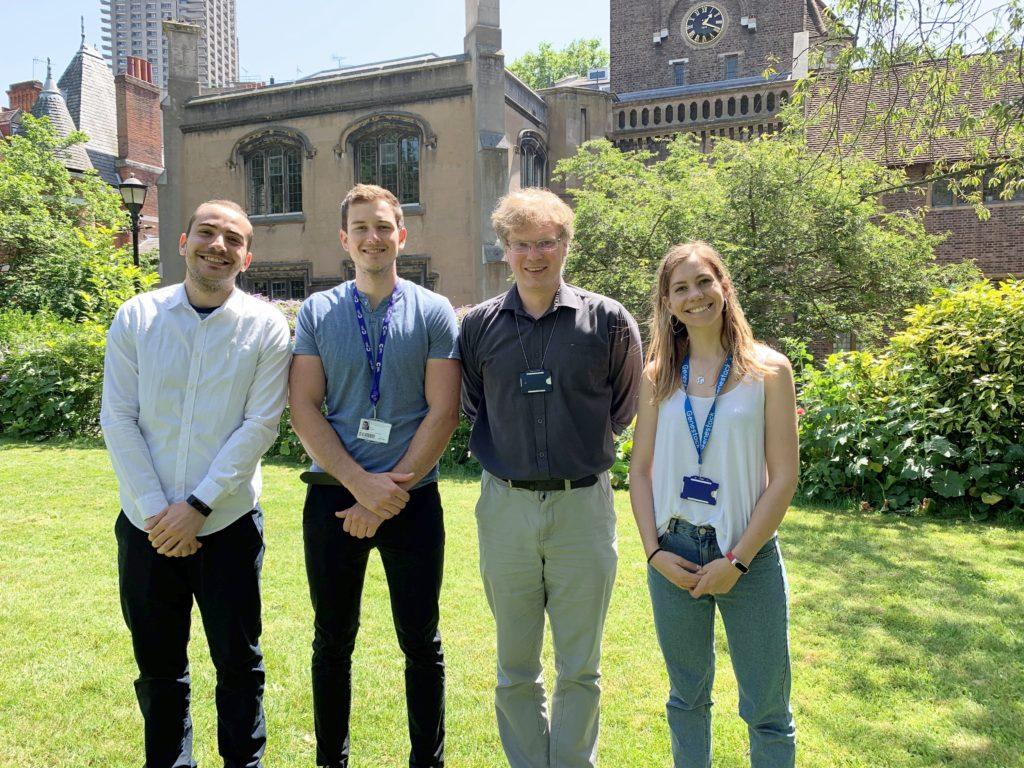 Postdoctoral Researchers
Biography
Present Appointment
- Professor of Genome Regulation, Barts Cancer Institute, Queen Mary University of London John Vane Science Centre August 2023 – Present
- Honorary Specialty Doctor. Histopathology. Royal London Hospital. Barts Health NHS Trust.
Past Appointments - Academic
- Reader, Centre for Haemato-Oncology, Barts Cancer Institute, Queen Mary University of London (August 2020 – August 2023)
- Senior Lecturer, Centre for Haemato-Oncology, Barts Cancer Institute, Queen Mary University of London (August 2017 – August 2020)
- Lecturer, Centre for Haemato-Oncology, Barts Cancer Institute, Queen Mary University of London (October 2013 – August 2017)
- Postdoctoral Research Associate, Cancer Research UK Beatson Institute, University of Glasgow, UK (April 2009 – September 2013).
- Cancer Research UK PhD Studentship, June 2004 – September 2008: Cancer Research UK Manchester Institute, University of Manchester, Manchester, UK.