
Tag: Models
Search News
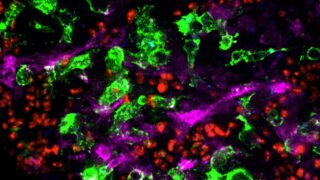
Lab-grown ovarian ‘mini-tumours’ provide new tool for immunotherapy research
25th March 2026
Researchers have developed a way to grow miniature ovarian tumours in the lab that mimic the tumour environment found in patients. The new approach offers a useful way to study how cancer cells interact with the immune system and to explore potential treatments. Ultimately, it could help accelerate progress for patients and reduce reliance on research methods involving animals.
Read more
Barts Cancer Institute teams awarded nearly £3m from Cancer Research UK to seek novel cancer therapy targets
11th March 2026
Professor Michelle Lockley and Dr Oliver Pearce have both been awarded prestigious Programme Foundation Awards from Cancer Research UK, worth nearly £1.5 million each, to support the work of their research groups at Barts Cancer Institute, Queen Mary University of London.
Read more
Discovery reveals new understanding of cancer-driving proteins in rare brain tumours and beyond
7th November 2025
Scientists have discovered that a single letter change in a gene called PRKCA drives a rare and hard-to-treat brain cancer, chordoid glioma, through an entirely unexpected mechanism. The findings could open up new ways to design targeted treatments for this difficult-to-treat disease, and possibly for other cancers involving the same gene.
Read more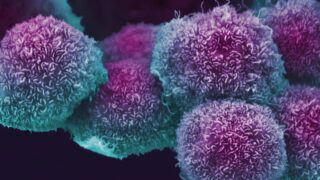
Scientists explore new way to bring CAR-T cell therapy to pancreatic cancer
22nd May 2025
A new strategy to help powerful cancer-targeting immune cells, known as CAR-T cells, infiltrate pancreatic tumours has been developed by researchers at Barts Cancer Institute, Queen Mary University of London. The unique three-pronged approach could pave the way for making CAR-T cell therapy—a treatment that has transformed care for certain blood cancers—effective against pancreatic cancer, a disease that remains very difficult to treat.
Read more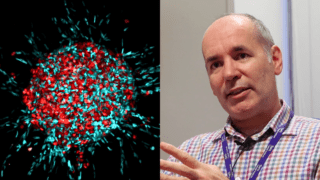
Video: mini-tumours shed light on how pancreatic cancer spreads
19th December 2023
We spoke to Professor Richard Grose about his lab’s latest study, which uses mini-tumours to understand how pancreatic cancer coerces normal cells to help it spread to other tissues. The new paper has been featured on the cover of the latest issue of the Journal of Pathology.
Read more
Dr Mirjana Efremova awarded £1m Cancer Research UK grant to decode bowel cancer’s plastic nature
14th December 2023
Congratulations to Dr Mirjana Efremova who has been awarded a £1m grant to use cutting-edge computational tools to study how bowel cancer adapts.
Read more