
Tag: Pancreas
Search News
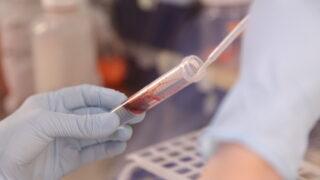
Study suggests simple blood test could help to monitor pancreatic cancer patients
28th April 2022
Researchers from Barts Cancer Institute at Queen Mary University of London have found it is possible to identify and track genetic variations in the tumours of patients with pancreatic cancer using a simple blood test.
Read more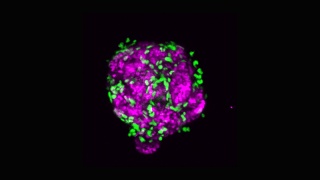
Targeting healthy cells changes invasive behaviour of pancreatic cancer
25th January 2022
Researchers from Barts Cancer Institute at Queen Mary University of London, led by Dr Angus Cameron, have found a way to modulate the invasive behaviour of pancreatic cancer by targeting a non-cancerous cell type found within pancreatic tumours. The findings, published in Cell Reports, provide valuable insights into the biology of pancreatic cancer progression, and could help to drive improvements in cancer treatment.
Read more
Our Pancreatic Cancer Research: From BCI Bench to Bedside
18th November 2021
Pancreatic cancer is a core area of research focus at the Barts Cancer Institute, Queen Mary University of London, with a major aim being direct translation of laboratory research into clinical trials with the hope of improving outcomes for patients. Find out more this World Pancreatic Cancer Day.
Read more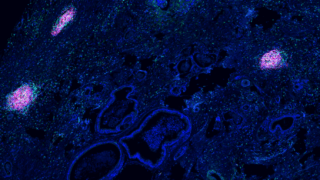
Immune cells assemble – boosting the effects of chemotherapy in pancreatic cancer
9th July 2021
A new study from Barts Cancer Institute, Queen Mary University of London, has demonstrated that immune cells can be stimulated to assemble into special structures within pancreatic cancer such that, at least in a pre-clinical model, researchers can demonstrate an improvement in the efficacy of chemotherapy.
Read more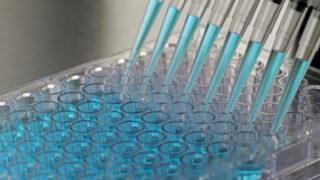
Study identifies biomarker that could help to diagnose pancreatic cancer
29th June 2021
Researchers from Barts Cancer Institute, Queen Mary University of London, have identified a protein that could be used to aid in the diagnosis of pancreatic cancer. Findings from the new study suggest that a protein called pentraxin 3 may be a specific diagnostic biomarker – or biological measure – for pancreatic cancer, with the ability to differentiate pancreatic cancer from other non-cancerous conditions of the pancreas.
Read more
Study to investigate how AI could aid early detection of pancreatic cancer
5th May 2021
Researchers from Barts Cancer Institute at Queen Mary University of London and Edge Hill University are set to investigate how artificial intelligence could be used to improve early diagnosis of pancreatic cancer.
Read more