
Category: Grants & Awards
Search News
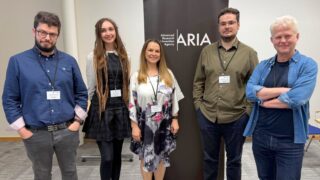
Scientists awarded £5.7m to harness epigenetics in next-generation anti-viral therapies
25th June 2026
Researchers have discovered a way in which the environment surrounding triple-negative breast cancer cells helps suppress our immune system, making this cancer harder to treat. The findings open the door to a potential new treatment strategy that could make triple-negative breast cancers more vulnerable to the immune system and help more people to benefit from immunotherapy in future.
Read more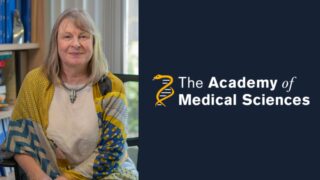
Professor Louise Jones elected Fellow of the Academy of Medical Sciences
21st May 2026
Professor Louise Jones at Barts Cancer Institute, Queen Mary University of London, has been elected to the Academy of Medical Sciences. She joins 60 exceptional biomedical and health scientists elected to its prestigious Fellowship.
Read more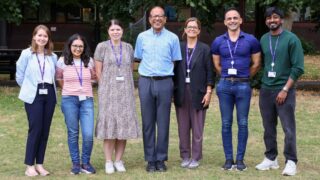
Pancreatic Cancer Research Fund Tissue Bank achieves landmark international accreditation
19th August 2025
The Pancreatic Cancer Research Fund Tissue Bank (PCRFTB) has become the first in England to receive ISO 20387:2018 accreditation, an international standard that recognises excellence in biobanking.
Read more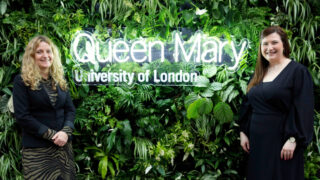
£10m awarded to partnership investigating innovative radiolabelled nanomedicines
11th August 2025
Researchers at Barts Cancer Institute (BCI), Queen Mary University of London, will play a part in a revolutionary new partnership with King’s College London and the University of Leeds, aiming to accelerate and optimise the clinical translation of healthcare nanotechnologies.
Read more
Barts Cancer Institute receives LEAF Awards for sustainability
19th March 2025
The Barts Cancer Institute (BCI), Queen Mary University of London, has been awarded the LEAF Bronze award for sustainability, achieving Bronze or Silver certification standards across each of our 15 laboratory sections.
Read more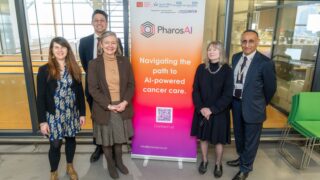
Queen Mary’s Barts Cancer Institute co-leads £43.6m initiative to accelerate AI-powered cancer breakthroughs
11th February 2025
Barts Cancer Institute, Queen Mary University of London will co-lead a ground-breaking collaboration, PharosAI, that aims to harness cutting-edge artificial intelligence (AI) and unlock decades of NHS cancer data. The UK government is committing £18.9 million to the project.
Read more