
Category: Publications
Search News
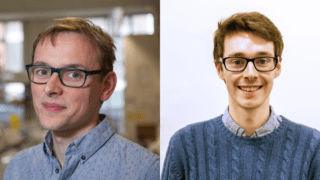
Turning back the molecular clock: Tracing cell lineage
6th January 2022
Researchers from Barts Cancer Institute at Queen Mary University of London, the Moffitt Cancer Center and the University of Southern California, have developed a new method that measures subtle changes to the genetic code of cells (called DNA methylation) to study the dynamics of what happens to cells within our bodies over time. The new method, published in Nature Biotechnology, provides a way to measure the birth and death of human cells, making it possible to trace cell lineage and evolution.
Read more
Investigating new strategies to target lung cancer
6th December 2021
Recent research from Barts Cancer Institute (BCI) at Queen Mary University of London has identified a novel therapeutic strategy to target lung cancer tumours that lack the gene LIMD1. We spoke with Professor Tyson V Sharp from BCI’s Centre for Cancer Cell & Molecular Biology, who led the study with Dr Sarah Martin, to find out more about the research and the significance of the findings.
Read more
AI algorithm identifies most effective drugs for liver cancer
1st November 2021
Researchers from Barts Cancer Institute at Queen Mary University of London and King’s College Hospital have shown that a new computer-based algorithm can rank drugs used to treat primary liver cancer, based on their efficacy in reducing cancer cell growth.
Read more
Mapping the emergence of treatment resistance in leukaemia
28th September 2021
Research led by Barts Cancer Institute, Queen Mary University of London, has identified a new role for a group of cells called adipocytes in contributing to treatment resistance in a type of leukaemia. Published in Nature Communications, the findings broaden the understanding of resistance pathways in blood cancer cells, which is critical for developing novel treatment strategies to improve outcomes for people with leukaemia.
Read more
Dissecting complex biological pathways with machine learning
19th July 2021
We spoke with Group Leader Dr Jun Wang and Postdoctoral Researcher Dr Anthony Anene from Barts Cancer Institute’s Centre for Cancer Genomics & Computational Biology about their most recent publication. Published in Patterns, the paper describes the development of a machine-learning tool called ACSNI that can be used to predict tissue-specific pathway components from large biological datasets.
Read more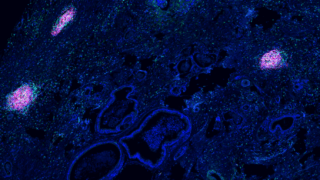
Immune cells assemble – boosting the effects of chemotherapy in pancreatic cancer
9th July 2021
A new study from Barts Cancer Institute, Queen Mary University of London, has demonstrated that immune cells can be stimulated to assemble into special structures within pancreatic cancer such that, at least in a pre-clinical model, researchers can demonstrate an improvement in the efficacy of chemotherapy.
Read more