
Tag: Computer models
Search News
Dissecting complex biological pathways with machine learning
19th July 2021
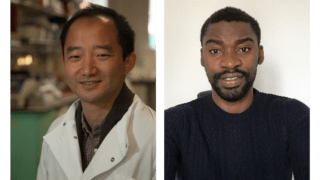
We spoke with Group Leader Dr Jun Wang and Postdoctoral Researcher Dr Anthony Anene from Barts Cancer Institute’s Centre for Cancer Genomics & Computational Biology about their most recent publication. Published in Patterns, the paper describes the development of a machine-learning tool called ACSNI that can be used to predict tissue-specific pathway components from large biological datasets.
Read more
BCI researcher part of team shortlisted for Cancer Grand Challenges awards
23rd June 2021
Dr Benjamin Werner from Barts Cancer Institute, Queen Mary University of London, is part of an international team that has been selected to share its ideas on how to solve one of cancer’s toughest challenges.
Read more
Researchers use machine learning to rank cancer drugs in order of efficacy
25th March 2021
Researchers from Barts Cancer Institute, Queen Mary University of London, have developed a machine learning algorithm that ranks drugs based on their efficacy in reducing cancer cell growth. The approach may have the potential to advance personalised therapies in the future by allowing oncologists to select the best drugs to treat individual cancer patients.
Read more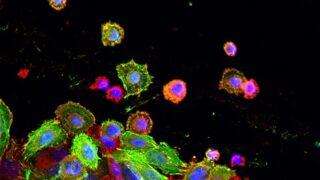
Immune ‘cloaking’ in cancer cells
14th September 2020
Researchers have created a mathematical model that can determine the impact of the immune system on tumour evolution. The information gained from using this model may be able to be used to predict whether immunotherapy is likely to be effective for a patient’s cancer, helping to guide treatment decisions.
Read more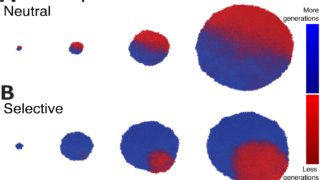
Using AI to study tumour evolution
2nd September 2020
Researchers have developed a computation model that can reconstruct the evolutionary history of cancer. By unravelling the genetic complexity of a tumour, the tool can be used to better understand how the cancer has developed and may help to guide treatment strategies in the future.
Read more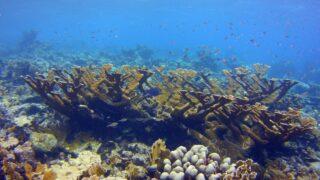
Evolutionary Insights: From cancer to corals
27th August 2020
Dr Benjamin Werner has teamed up with evolutionary ecologists as part of a new research collaboration, funded by a $1 million research grant from the Human Frontier Science Program.
Read more