Tag: Patients
Search News

Barts Cancer Institute teams awarded nearly £3m from Cancer Research UK to seek novel cancer therapy targets
11th March 2026
Professor Michelle Lockley and Dr Oliver Pearce have both been awarded prestigious Programme Foundation Awards from Cancer Research UK, worth nearly £1.5 million each, to support the work of their research groups at Barts Cancer Institute, Queen Mary University of London.
Read more
NHS changes guidelines for bladder cancer patients following new clinical trial results
12th February 2026
Thousands of people with advanced bladder cancer across the UK will now receive three rather than six chemotherapy cycles after Queen Mary University of London-led research led to a change to NHS treatment guidelines. For patients, this means fewer toxic side effects and a better quality of life during treatment.
Read more
New spinout launches to advance early pancreatic cancer detection
29th October 2025
Queen Mary University of London has launched a new company, Procyon Diagnostics, to provide pioneering early cancer detection tests. The company’s first test, PancRISK, offers new hope for detecting pancreatic cancer earlier, building on over 15 years of research by Professor Tatjana Crnogorac-Jurcevic at Queen Mary’s Barts Cancer Institute (BCI), funded by the Pancreatic Cancer Research Fund.
Read more
Breakthrough life-extending treatment for advanced bladder cancer available on NHS
21st August 2025
The new combination treatment offers hope to thousands of people living with advanced urothelial cancer. The clinical trials, led by Professor Tom Powles at Barts Cancer Institute, Queen Mary University of London, showed that overall survival rates were almost twice as long with this new treatment compared to the current standard treatment.
Read more
Pancreatic Cancer Research Fund Tissue Bank achieves landmark international accreditation
19th August 2025
The Pancreatic Cancer Research Fund Tissue Bank (PCRFTB) has become the first in England to receive ISO 20387:2018 accreditation, an international standard that recognises excellence in biobanking.
Read more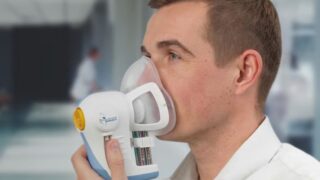
Could a breath test detect blood cancer?
23rd July 2025
Molecules exhaled in the breath may provide clues to detect blood cancer, according to new research by scientists at Barts Cancer Institute. The findings could enable the development of a blood cancer breathalyser, providing a rapid, low-cost way to detect disease.
Read more