
Tag: Viruses
Search News

Scientists awarded £5.7m to harness epigenetics in next-generation anti-viral therapies
25th June 2026
Researchers have discovered a way in which the environment surrounding triple-negative breast cancer cells helps suppress our immune system, making this cancer harder to treat. The findings open the door to a potential new treatment strategy that could make triple-negative breast cancers more vulnerable to the immune system and help more people to benefit from immunotherapy in future.
Read more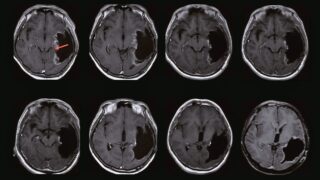
Cancer-killing virus treatment shows promise in brain tumour trial
8th November 2024
An innovative cancer-killing virus shows promise for tackling glioblastoma, an aggressive type of brain tumour, according to new results from a phase I clinical trial co-led by researchers at Barts Cancer Institute.
Read more
BCI researcher receives prestigious MRC grant to investigate how HPV infection develops into cancer
27th May 2022
Dr Sarah McClelland from BCI is part of a collaborative project that has secured £1.2 million in funding from the Medical Research Council to investigate the mechanisms leading to cancer development in cells infected with human papillomavirus.
Read more
Researchers develop virus-based treatment platform to fight pancreatic cancer
27th January 2021
Researchers from Barts Cancer Institute, Queen Mary University of London, and Zhengzhou University have developed a powerful therapeutic platform that uses a modified virus for the treatment of pancreatic cancer. By using the virus in combination with other drugs, the treatment significantly extended survival in preclinical models of pancreatic cancer.
Read more
Covid-19 and blood cancer
3rd June 2020
One of the first studies to investigate the outcome of Covid-19 infection in patients with blood cancer has been conducted by clinical researchers from Barts Cancer Institute, Queen Mary University of London, and Barts Health NHS Trust.
Read more
Foot-and-mouth-disease virus could help target pancreatic cancer
12th February 2020
Researchers at Barts Cancer Institute, Queen Mary University of London, have identified a peptide, or protein fragment, taken from the foot-and-mouth-disease virus that targets another protein, called avβ6 (alpha-v-beta-6). This protein is found at high levels on the surface of the majority of pancreatic cancer cells.
Read more